Our History
History - 1880s
History - 1880s

1880s-1930s

CHAPTER 1: THE ERA OF INVENTORS

1880s-1930s
1940s-1950s
1950s-1960s
1970s-2010s
2017 - 140 YEARS

THE ERA OF INVENTORS

Chapter 1

Getting into the watch manufacturing business in the mid-1880s was no easy feat. Switzerland was experiencing the worst part of a long recession. Yet, despite the economic difficulty, social unrest and uncertainty about the future, 24-year-old Leon Breitling stayed true to his vision of creating instruments that could measure, divide and master time.

This is how Breitling was born. With passion and enthusiasm, three generations of inventive founders—Leon, Gaston and Willy Breitling—laid the foundation for the precise, reliable and versatile timepieces we’ve come to know today.

1884

Leon Breitling

Growing up in the epicenter of watchmaking: La Chaux-de-Fonds had a profound influence on the founder Leon Breitling and would lead him to starting his apprenticeship in watchmaking. Upon completing his education, Leon was ready to open his own atelier in St. Imier, another watchmaking town in the Jura mountains. There, he used the traditional Swiss “Établissage” system of manufacturing watches —a decentralized method of assembling watches—and would develop a specialization in chronographs. This category of watches was in high demand. With the industrial revolution at its peak, timekeepers were needed in every aspect of industry, science, and sport. Leon was keen on satisfying this demand through his newly founded company. 
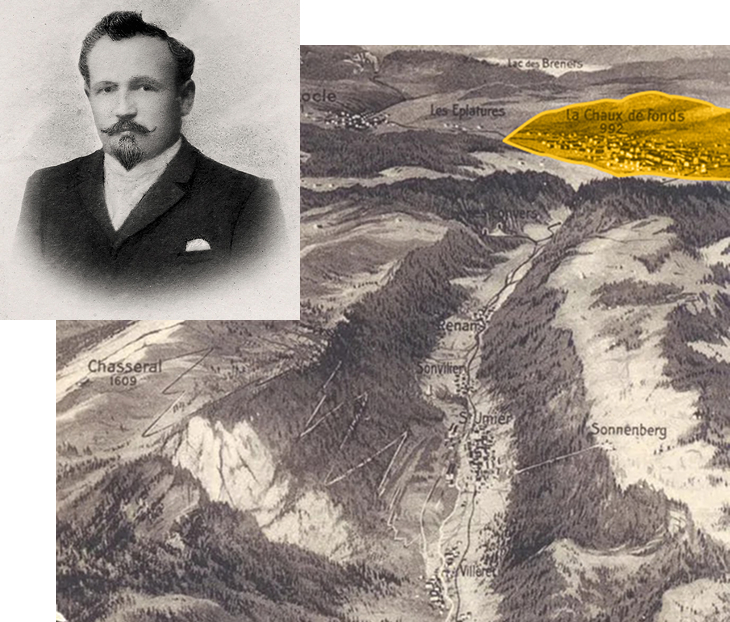
{generated} Historic portrait beside a vintage map highlighting La Chaux-de-Fonds, evoking Breitling heritage from its 1884 beginnings
The term “Établissage” refers to a traditional Swiss system of manufacturing, where key components are sourced from specialist external suppliers, and then assembled, finished, and regulated by the watchmaker or brand.

1892

Manufactory

Just eight years after founding his atelier, Leon moved his operations to La Chaux-de-Fonds: his hometown and the epicenter of Swiss watchmaking. Very much in line with Leon’s success, this is where Breitling went from a small-sized workshop into a full-fledged factory which enabled an industrialized production. 

1899

Montbrillant

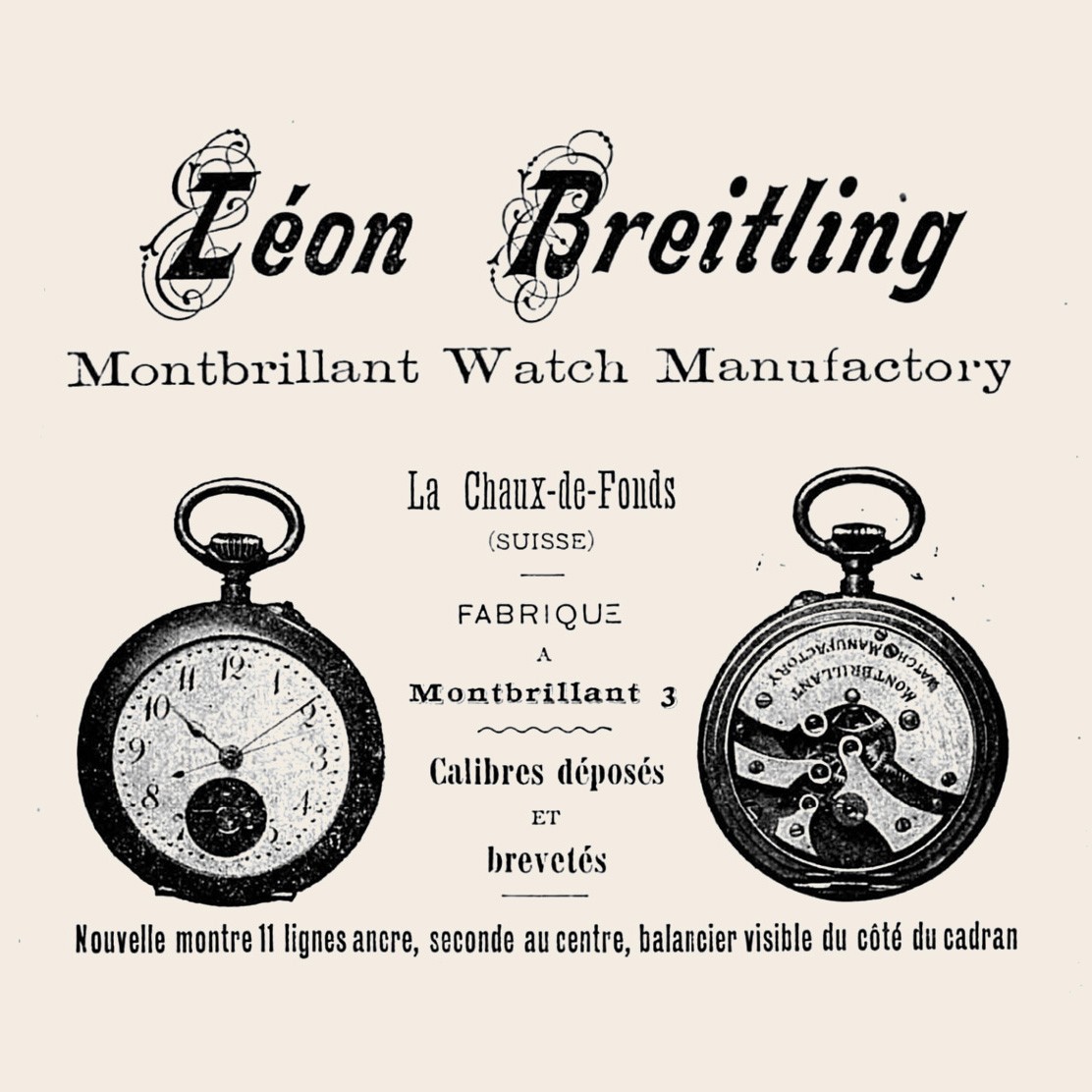
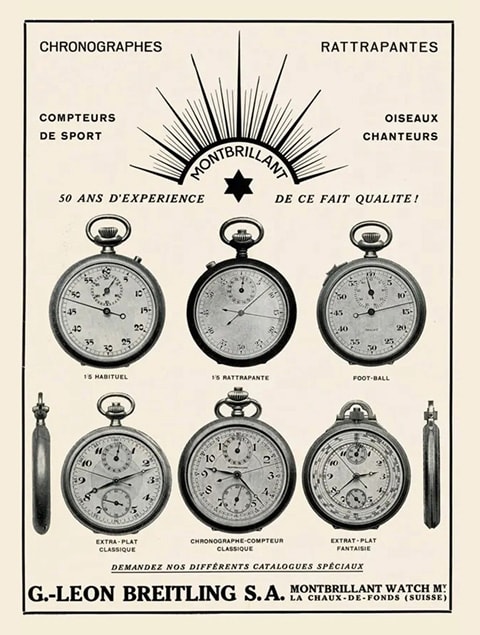
A few years after establishing his factory, the street was renamed “Rue de Montbrillant.” This was a name Leon was particularly fond of, so much so that he included it in his company name in 1899: “L. Breitling, Montbrillant Watch Manufactory.” 
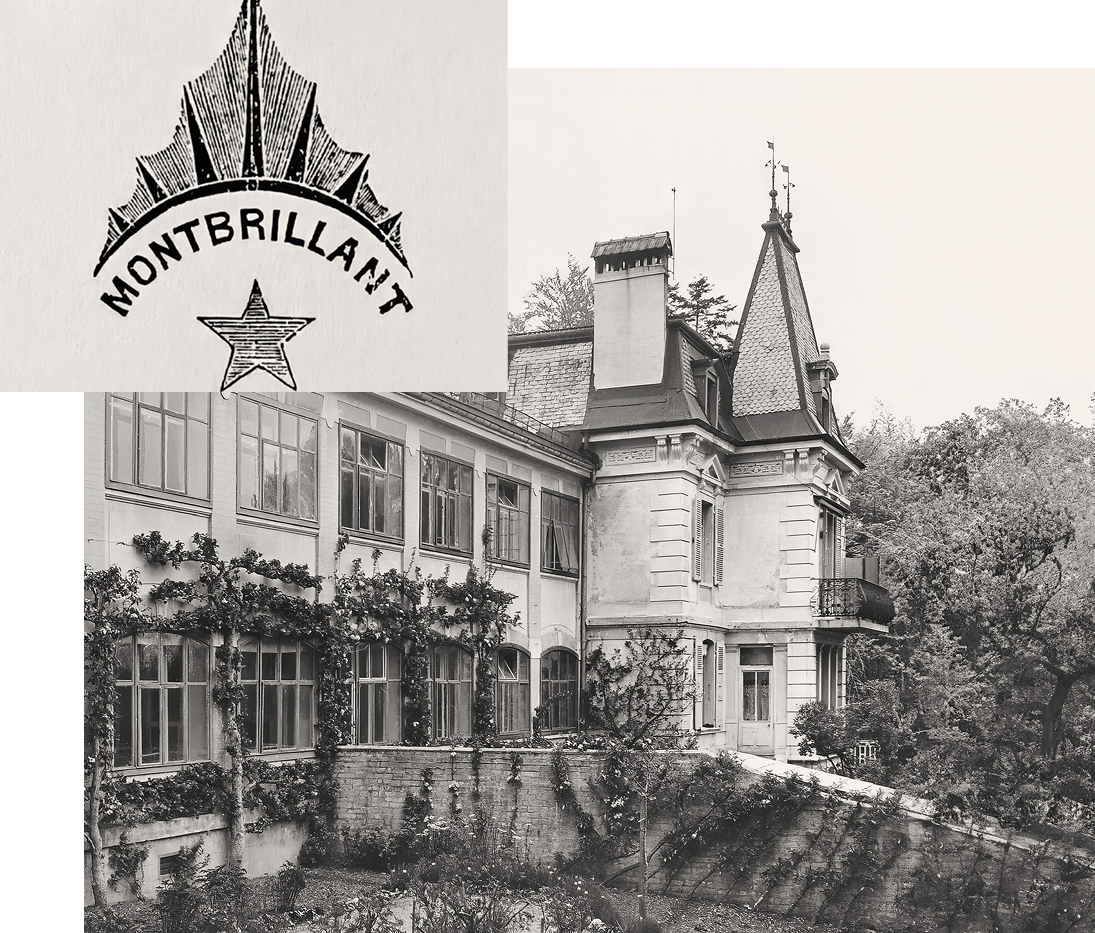
{generated} Historic Montbrillant building framed by trees with an archival crest, reflecting Breitling’s early workshop heritage.
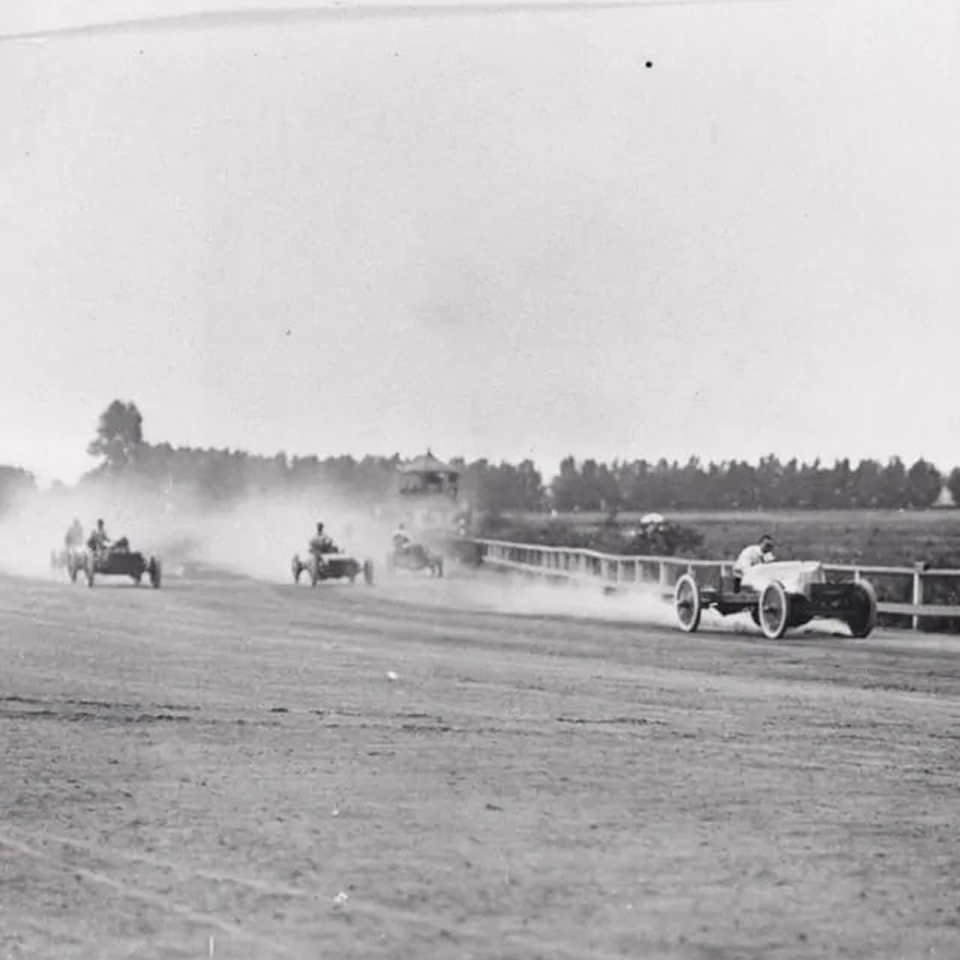
{generated} Vintage 1907 race cars speed along a dusty track, conveying early motorsport energy as drivers press toward the finish
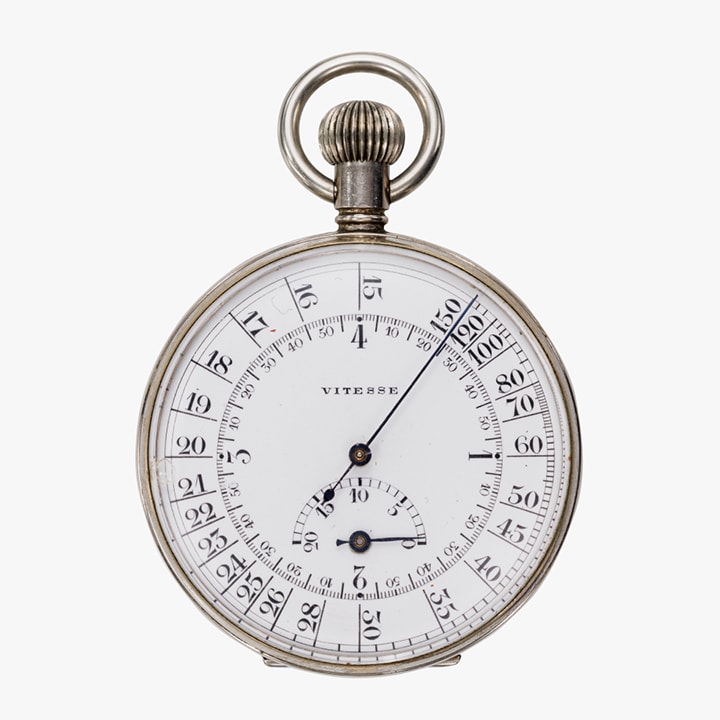
{generated} Historic Breitling 1907 pocket chronograph featuring a white dial, ornate crown and precisely rendered measurement scales.

1907

Vitesse

One of the earliest and most noteworthy developments created within the walls of Leon Breitling’s manufactory in La Chaux-de-Fonds was the “Vitesse” chronograph pocket watch. French for “speed,” it was designed to measure velocities between 15 to 250 miles or kilometers per hour. This innovation was so effective, it was even used by Swiss police to issue the first speeding tickets. Yes, you have Breitling to “thank” for that innovation.  

1910

100,000 Units Sold

Just 26 years after Leon Breitling founded his brand, the company reached a remarkable milestone: the productions of its 100,000th timepiece. For that era, this level of output was extraordinary—establishing Breitling not just as a respected name, but as a leading manufacturer of precision instruments.  

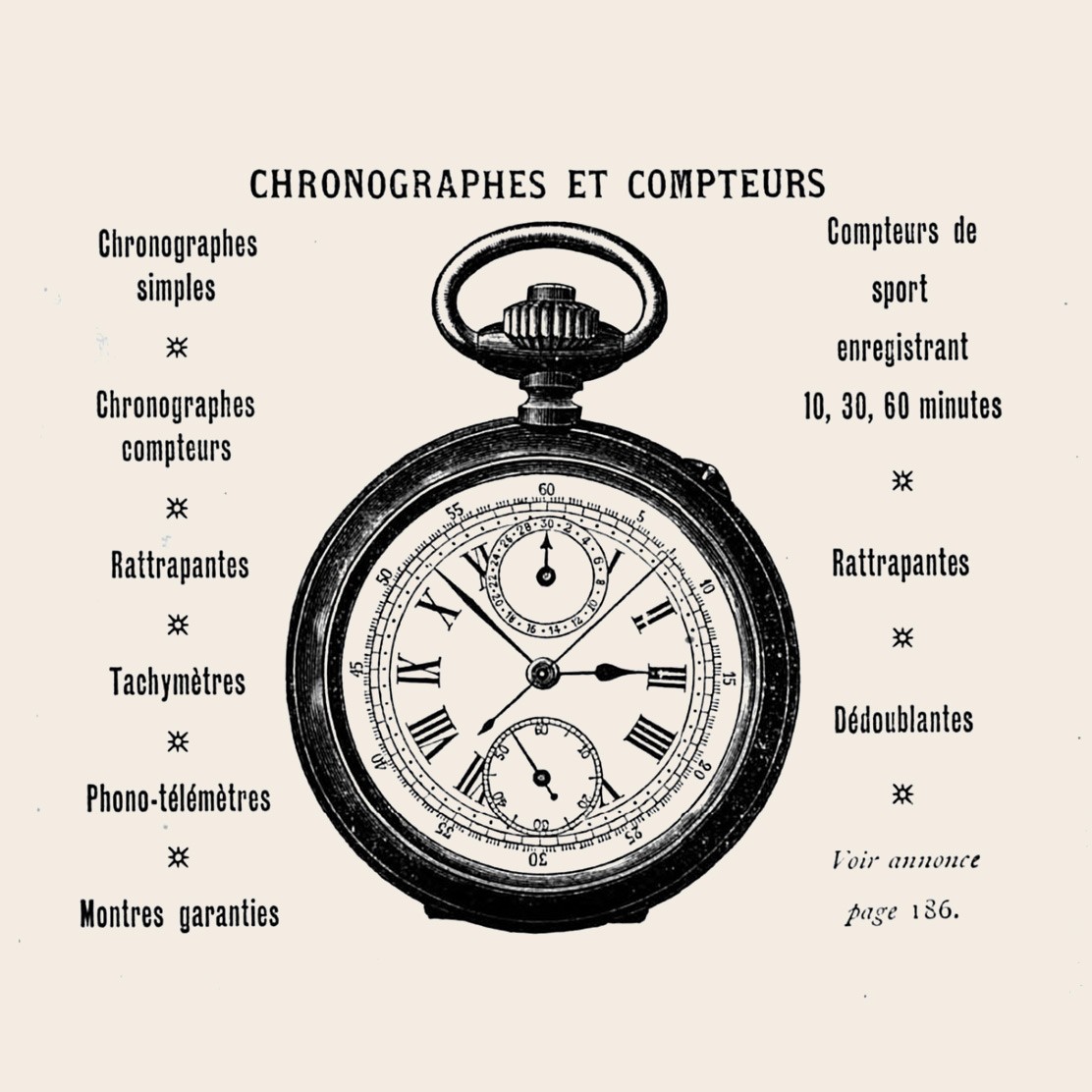
{generated} Vintage Breitling illustration showing an early chronograph pocket watch with detailed dials and French feature listings
{generated} Vintage Léon Breitling advertisement showcasing early Montbrillant pocket watches with ornate dials and exposed movement
{generated} Vintage oval portrait of a suited figure from 1914, highlighting early heritage within a refined historical setting.

1914

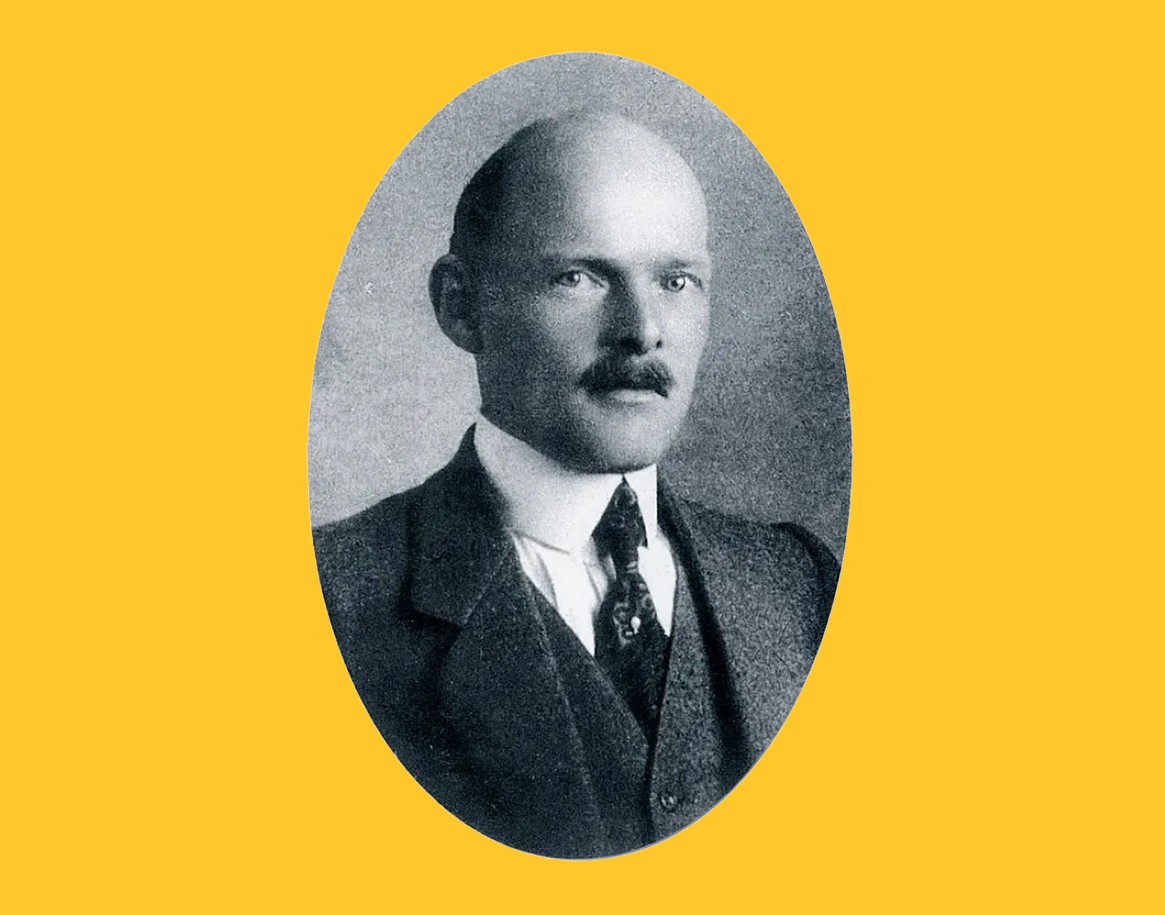
Gaston Breitling

At only 54, Leon’s life came to an end, but the Breitling story was just getting underway. Leon’s only son, Gaston Breitling, took the helm of the company.  

1915

First Independent Chronograph Pusher

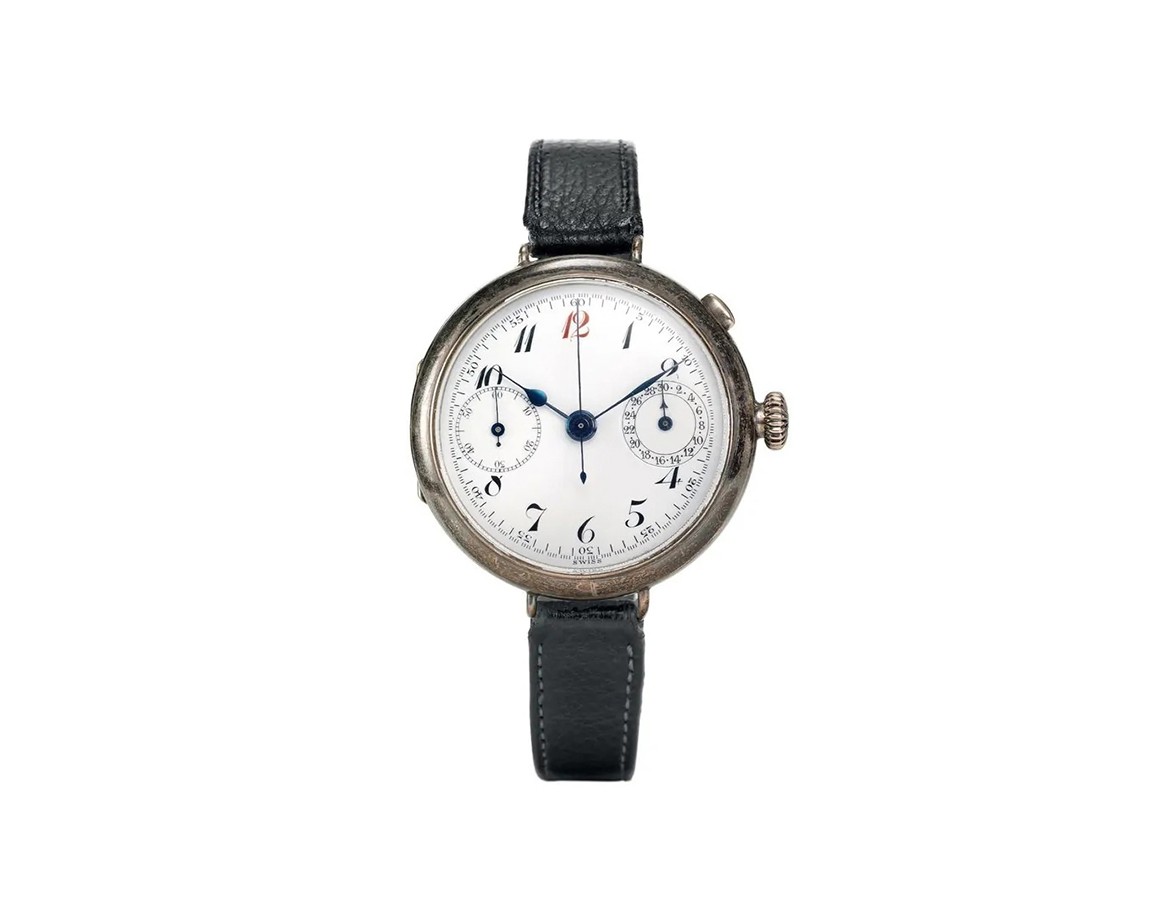
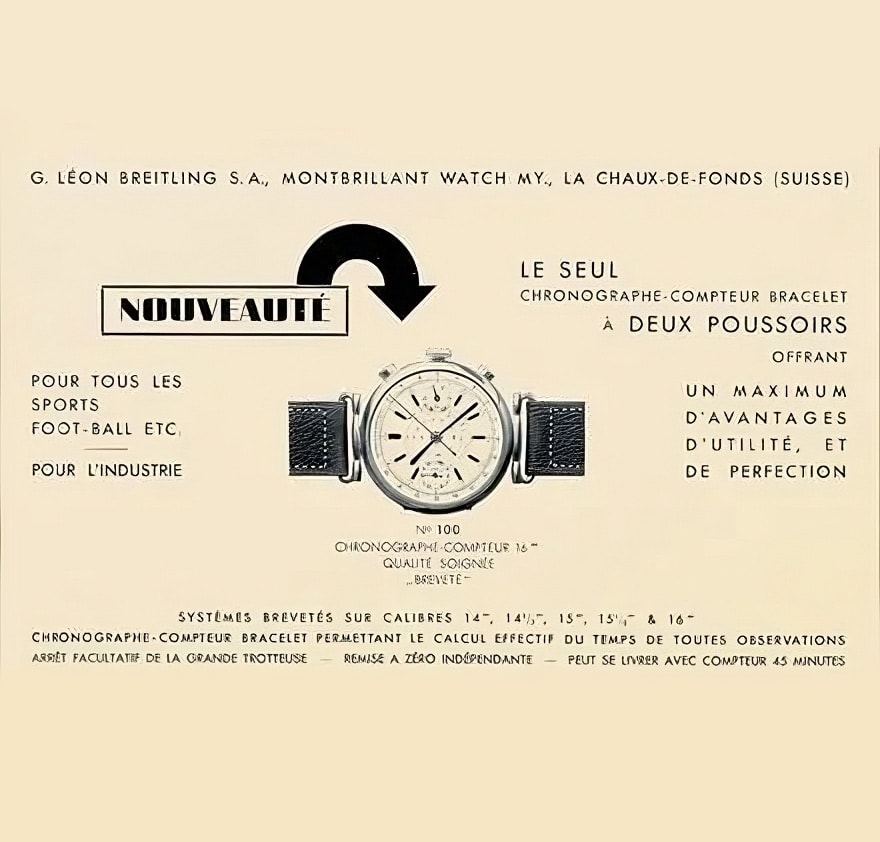
Gaston hit the ground sprinting by completing his father’s vision with the launch of the first timepiece to feature an independent chronograph pusher at the 2 o’clock position. This pusher was used to start, stop, and reset the chronograph—a convenient and ergonomic feature that would soon have the whole industry following suit. Breitling’s first “monopusher” chronograph was swiftly moved into industrialized production. The independent pusher on wristwatches debuted as World War I was erupting, and its utility would prove crucial.  
{generated} Breitling 1915 vintage chronograph with white dial, blue hands and a black leather strap shown against a clean backdrop
Up until World War I, men had pocket watches. Wristwatches were considered women’s wear. The advantage of having a watch visible on the wrist became evident on the battlefield. Dipping into the waistcoat pocket took time no soldier could afford. 
{generated} Vintage Breitling advert presenting the Chronographe-Compteur No 100 with dual pushers and accompanying technical details.
{generated} Historic Breitling chronograph sketch detailing intricate pocket‑watch mechanics and annotated components in classic 1923 style

1923

Start, Stop, Pause, Reset

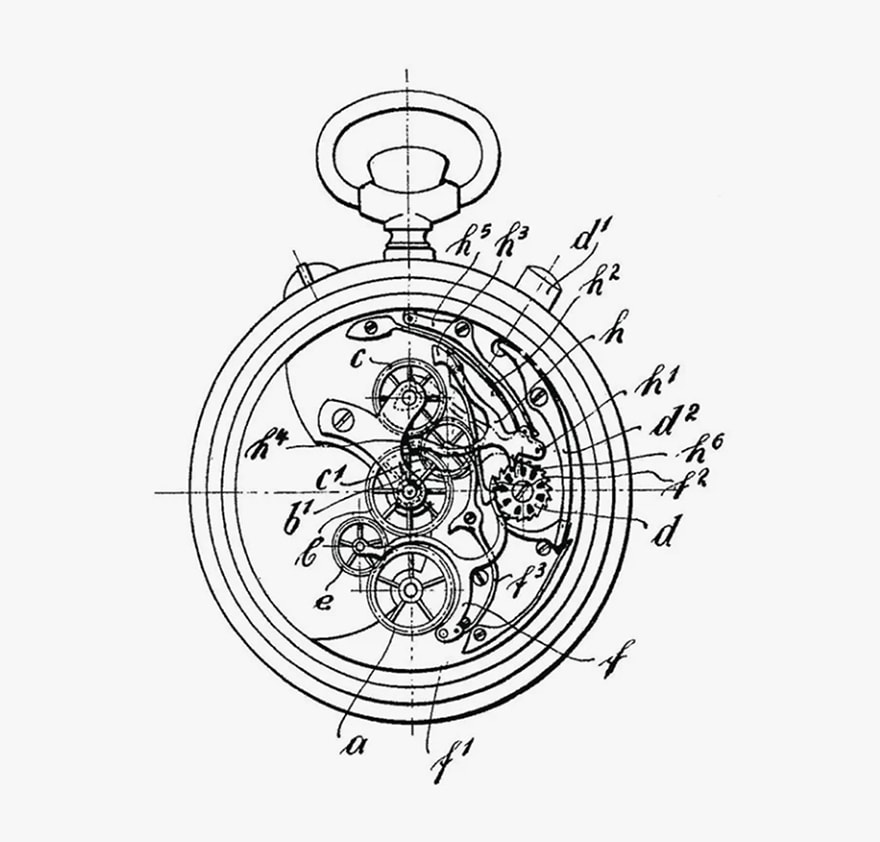
Having persevered through the economic turmoil of World War I, Gaston would enjoy rekindled success with the brand founded by his father in the 1920s. His next big innovation was a patent filed in 1923, known as the “Brevet, 105532.” It introduced a system where the chronograph could be paused with the 2 o’clock pusher and independently reset when the crown was in a different position. While not used today, this innovation laid the groundwork for a major breakthrough that was yet to come. 

{generated} Vintage black‑and‑white portrait of a man in a tailored suit, evoking the refined character of Breitling’s 1932 era.

1932

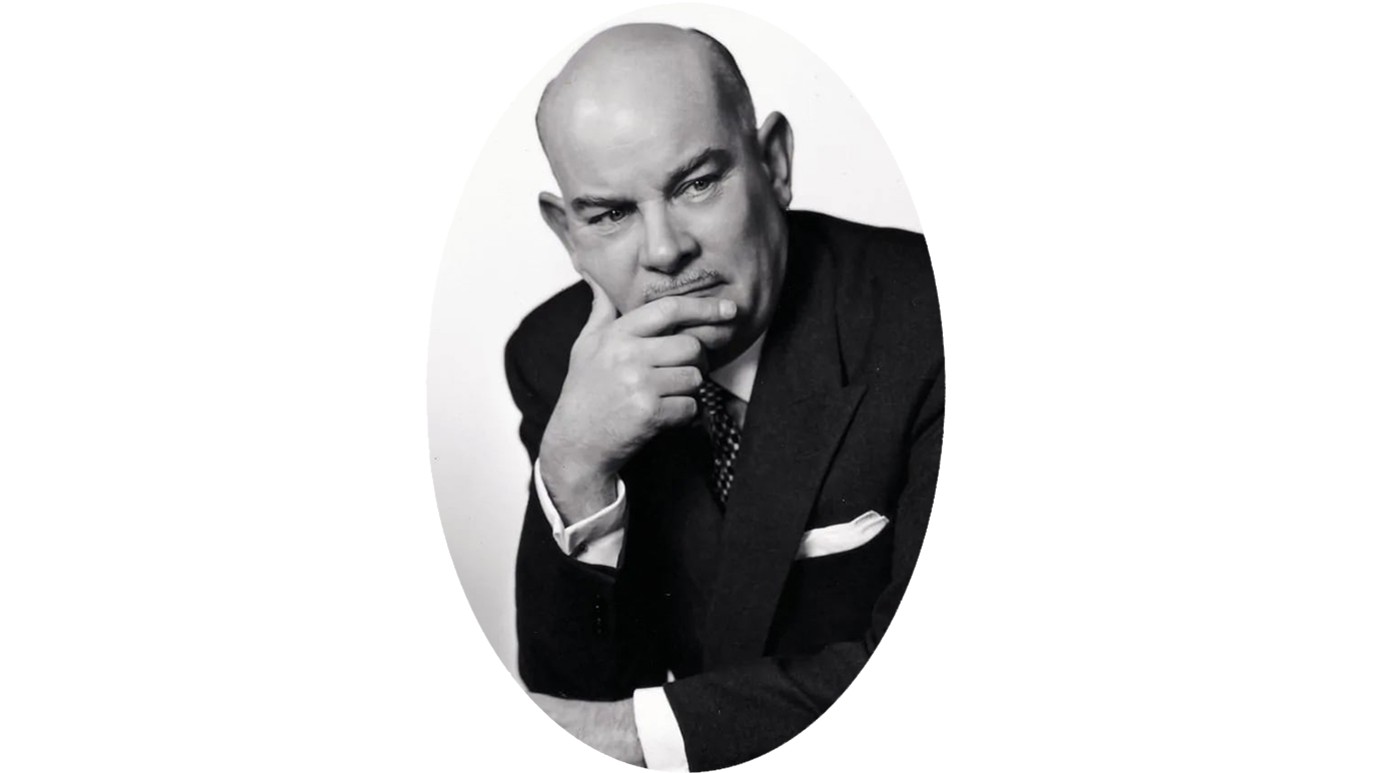
Willy Breitling

Gaston’s son Willy was just 14 when his father passed away. His mother Berthe kept the company running until, at 19, Willy convinced her he was ready to lead. He proved to be exactly what Breitling needed: clear-eyed, inventive, and ahead of his time. If luck comes in waves, Willy had the rare ability to ride them. 
{generated} Vintage 1932 scene merging a speeding car with an oversized Breitling dial, conveying early chronograph precision.
{generated} Vintage Breitling chronograph dial layered over a 1933 racing car and driver, evoking the brand’s early timing heritage
{generated} Vintage 1933 Breitling poster featuring Montbrillant chronograph pocket watches with refined dials and elegant period styling

1933

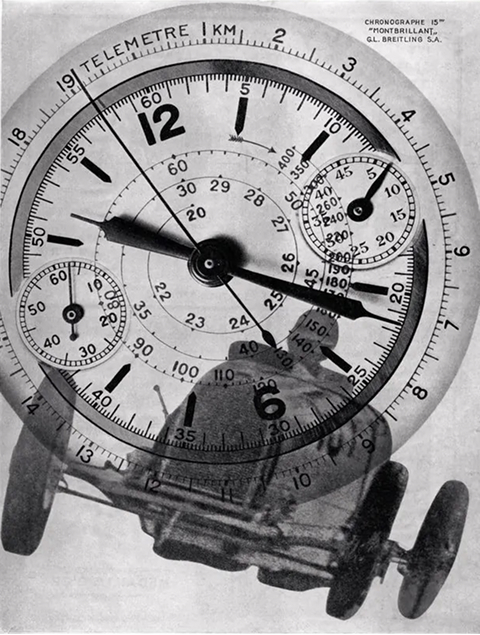
Inventing the Modern Chronograph

Willy combined marketing instinct with a deep belief in innovation. Just one year after taking the helm of the company, he filed a patent to complete his father’s vision of stopping and resetting the chronograph. Instead of relying on the crown, he introduced a second pusher at 4 o’clock, effectively inventing the form of the modern chronograph. This system Willy pioneered was industrialized in the following year, where its mass production set a standard for the industry. 

Every chronograph that uses the dual-pusher system has been influenced by three generations of Breitling innovation.

1937

Huit Aviation—Pioneers of Aviation Chronographs

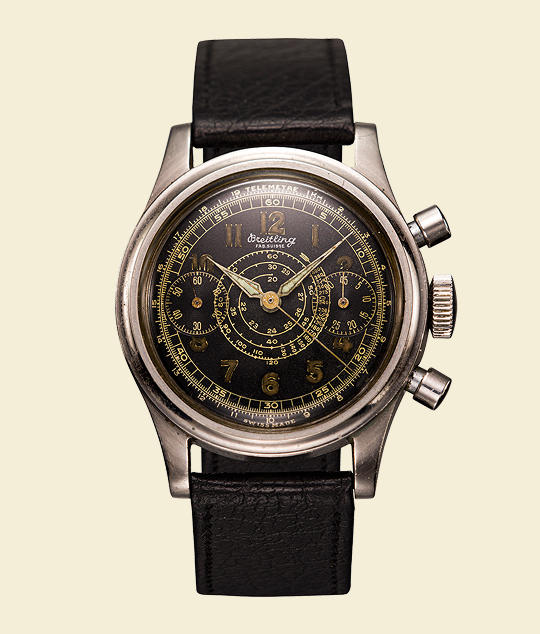
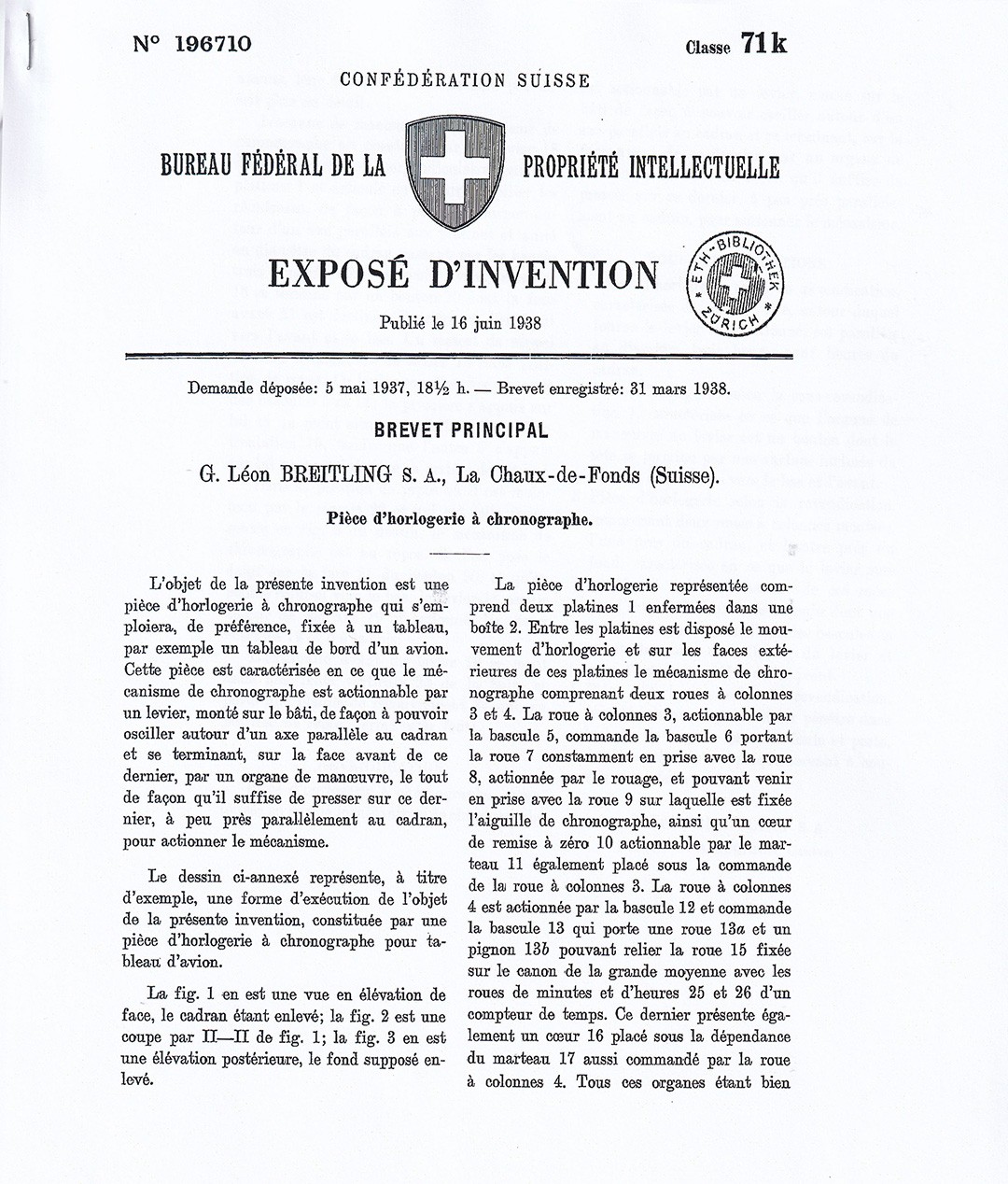
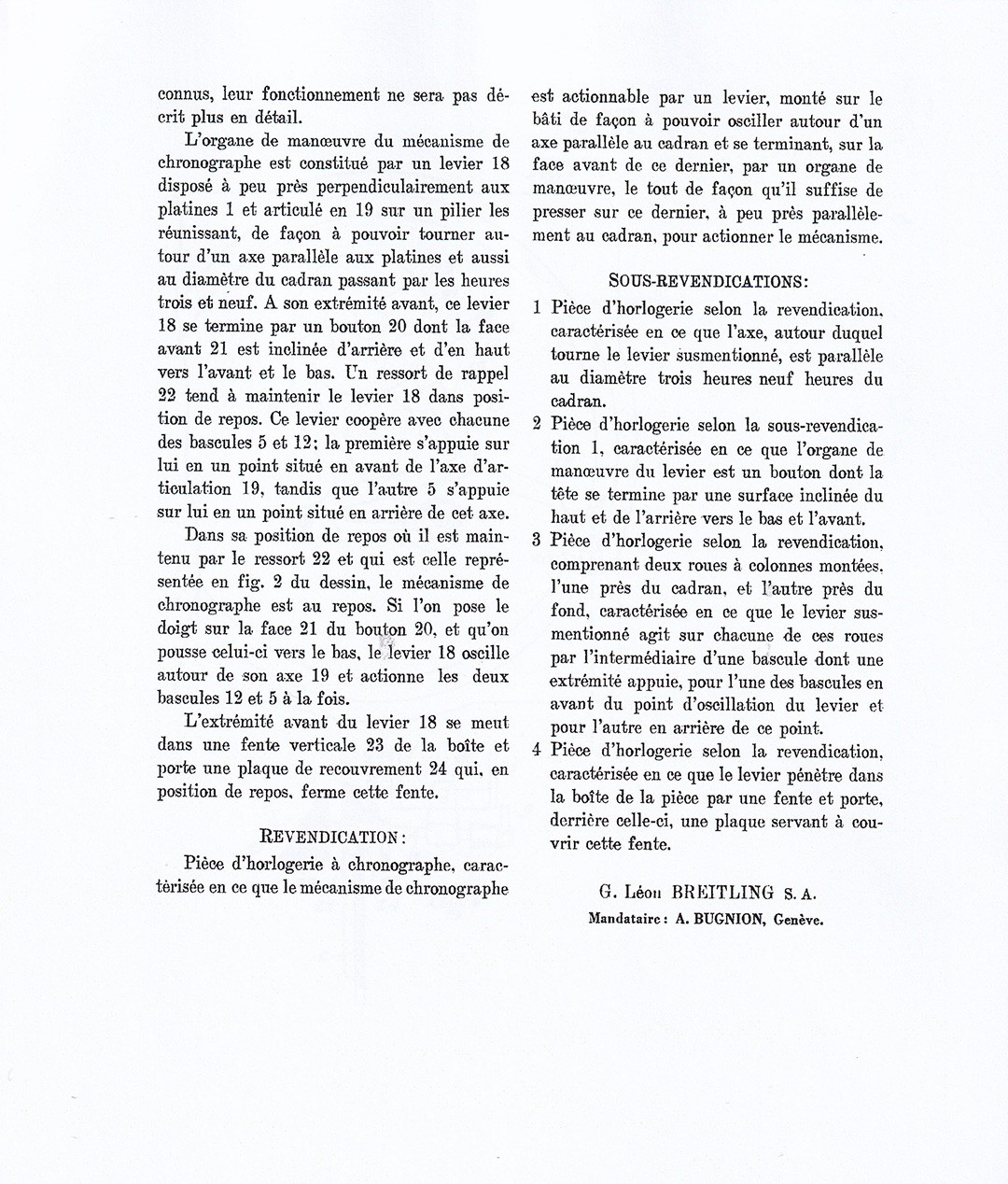
A mere two years before World War II, Willy Breitling was invited to present his idea of the perfect cockpit chronograph to the British War Office. This event was the foundation of Breitling’s inherent link to aviation. A year later, Willy established the Huit Aviation division—a department tasked specifically for these instruments which were crucial for the allied forces in the years to come. One such example was the first Breitling-designed aviator wrist chronograph, ref. 734, debuted in the first Breitling Huit Aviation catalog.

Clamshell Case

“Air” wasn’t the only universe 1937 was the foundational year for, as it was also the year Breitling released what was known to be amongst the first waterproof and dustproof chronographs. The “Clamshell” was characterized by its unique case architecture made by the “Schmitz Freres”. The movement had to be removed from the dial side, leaving fewer case-openings which helped keep water and dust away. The clamshell case was short-lived and eventually replaced but stood for Breitling’s commitment to pushing the boundaries in the sea universe as well.  
{generated} Vintage illustration showing aircraft, race car, cyclists and swimmer framed by a stopwatch scale with Breitling branding.
{generated} Vintage Breitling chronograph with black dial, gold markings, and leather strap evoking the brand’s inventive era.
{generated} Historic Swiss patent document outlining a Breitling chronograph invention with detailed technical notes and provenance.
{generated} Vintage Breitling patent text outlining early chronograph mechanics, reflecting the era’s inventive technical precision

BREITLING: 140 YEARS IN 140 STORIES

Discover Breitling’s legacy through our anniversary book: 140 Years in 140 Stories. The narrative traces our humble beginnings from Leon Breitling’s modest workshop in Saint-Imier to our emergence as one of the most important watch brands of the 21st century.
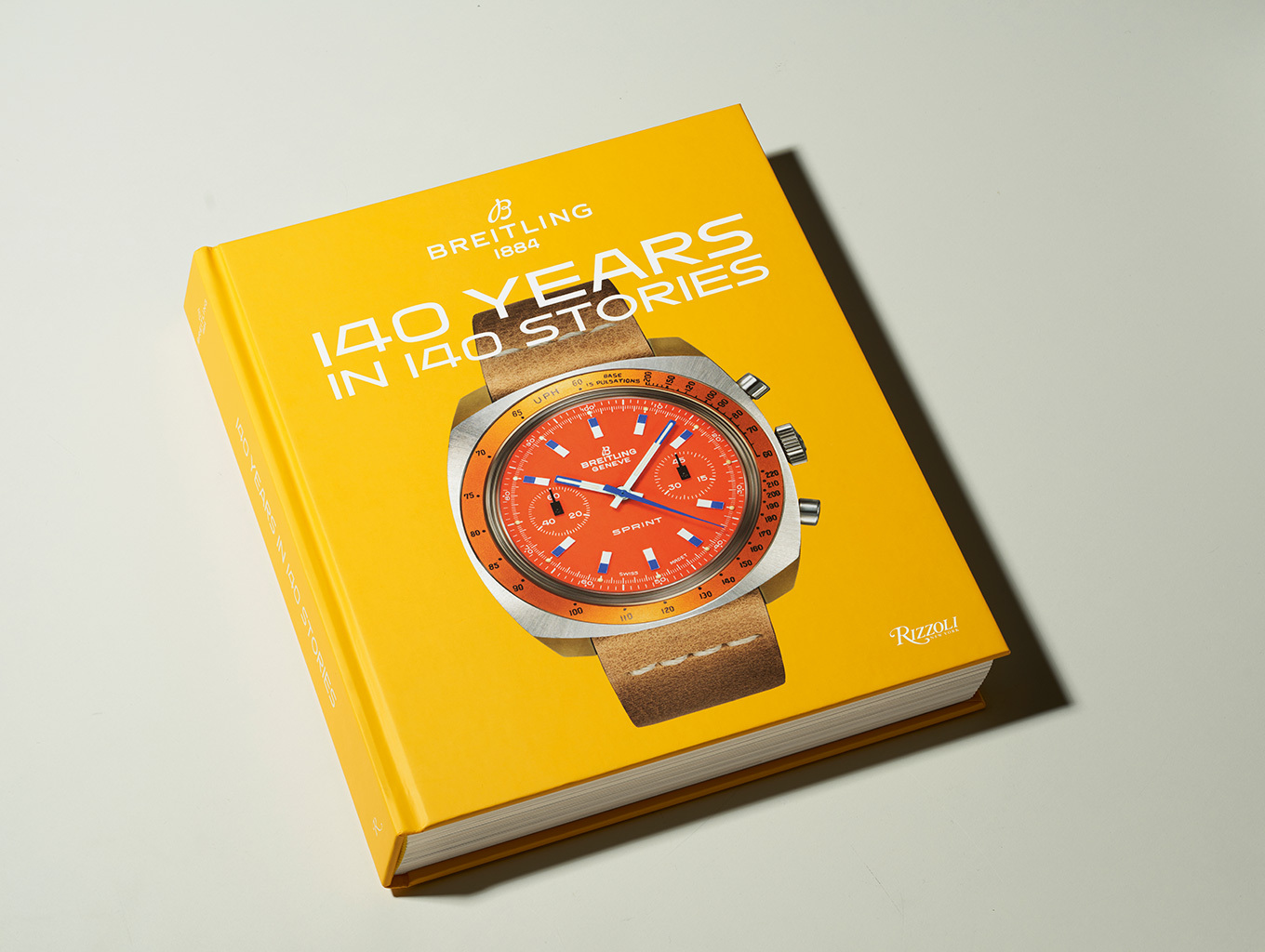
COMMEMORATIVE BOOK
COMMEMORATIVE BOOK